

As sports clubs prepare for the 2026 season, many are reviewing how they evaluate athletes. While some clubs still rely on paper forms, spreadsheets, or notes, these methods often become difficult to manage as programs grow.
Manual athlete evaluations may work for small groups. But over time, they can limit consistency, visibility, and long-term planning. This is why many clubs are shifting toward structured digital evaluation tools.
Below are clear signs your club may have outgrown manual athlete evaluations and what clubs should consider next.
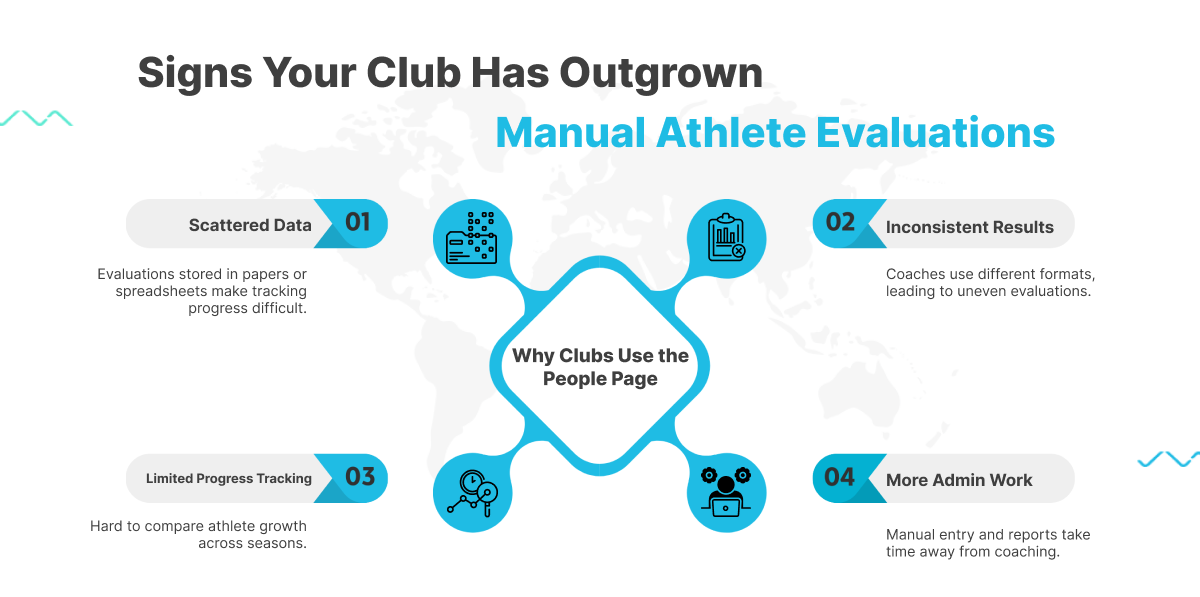
1. Evaluations Are Stored in Too Many Places
One of the first warning signs is scattered data.
If your club stores evaluations across:
- Paper forms
- Email attachments
- Spreadsheets
- Individual coach notebooks
It becomes hard to track athlete progress over time.
Checklick addresses this by allowing clubs to store athlete evaluations digitally in one place, keeping records organized and accessible when needed. This reduces the risk of lost or inconsistent data.
2. Coaches Evaluate Athletes Differently
Manual systems often lead to inconsistency.
When evaluations depend on personal notes or different formats, results vary from coach to coach. This makes it difficult to compare athletes fairly or track development accurately.
Checklick allows clubs to use structured evaluation checklists, helping coaches assess athletes using the same criteria across programs. This supports consistency without changing how coaches work on the field.
3. It’s Hard to Track Progress Across Seasons
Athlete development happens over time. Manual evaluations make it difficult to compare results from one season to the next.
Common issues include:
- Missing past evaluations
- No clear history of progress
- Difficulty identifying trends
With Checklick, evaluations remain linked to each athlete profile. This helps clubs review past assessments and understand development across multiple seasons.
4. Sharing Feedback Takes Extra Time
Manual evaluations often slow communication.
Clubs may need to:
- Scan or retype notes
- Send multiple emails
- Answer repeated questions from parents or athletes
Checklick supports clear progress sharing by keeping evaluations organized and accessible. This helps clubs communicate outcomes more efficiently without additional admin work.
5. Admin Work Is Increasing Each Season
As clubs grow, admin tasks increase.
Manual evaluation systems often require:
- Re-entering data
- Managing files
- Double-checking records
This takes time away from coaching and planning.
Checklick helps reduce admin load by keeping evaluations digital and connected to athlete records. This allows staff to spend less time managing paperwork and more time supporting programs.
6. Your Club Runs Multiple Programs or Levels
Clubs offering:
- Youth and adult programs
- Skill-level groupings
- Seasonal training programs
Often struggle with manual evaluations.
Checklick allows clubs to create different evaluation structures for different programs while keeping everything within one system. This helps clubs manage complexity without adding more tools.
7. Preparing Reports Is Time-Consuming
When evaluation data is manual, reporting becomes difficult.
Clubs may struggle to:
- Review overall program performance
- Identify areas for improvement
- Prepare summaries for planning
Checklick provides reporting and overview tools that help clubs review evaluation data more easily, supporting better planning without complex analysis.
8. Manual Systems Don’t Scale With Growth
What worked for 20 athletes may not work for 200.
Manual evaluations often break down as clubs grow, adding pressure on staff and increasing the chance of errors.
Checklick is designed to support clubs as they scale, allowing them to add athletes, programs, and evaluations without changing systems.
Why Clubs Are Moving Away From Manual Evaluations Before 2026
As expectations rise from athletes, parents, and organizations, clubs need clearer systems.
Digital evaluations help clubs:
- Stay organized
- Improve consistency
- Support long-term development
- Reduce admin effort
Checklick provides a structured evaluation system that fits within broader club operations, making it easier for clubs to prepare for the future.
Conclusion
Manual athlete evaluations are not wrong, but they often reach a limit.
If your club:
- Struggles to organize evaluations
- Can’t track progress over time
- Spends too much time on admin
- Runs multiple programs
It may be time to move to a digital system.
Checklick helps clubs transition from manual evaluations to structured, digital assessments while keeping processes simple and practical.
