
Coach turnover is one of the most predictable challenges in running a sports club. Every season, some coaches move on. New ones join. And somewhere in that transition, athlete development history gets lost.
It does not always happen dramatically. Sometimes it is subtle. The outgoing coach had their evaluations on a personal spreadsheet that they took with them. The incoming coach did not know what the previous one had been tracking. A few athletes start the new season without any record of where they left off. The new coach builds their own picture from scratch. And by the time they have the same depth of knowledge the previous coach had, months have passed and program continuity has suffered.
This pattern repeats at clubs of every size and every sport. And because it happens gradually rather than in a single obvious failure, most clubs do not identify it as a systemic problem until something goes wrong. A parent asks why their child appears to have been assessed at the wrong level. A grading event requires documentation that nobody can locate. A funding application needs historical participation data that was never centralized.
The solution is not keeping coaches longer, though that helps. It is building a system where athlete data belongs to the club rather than to any individual coach, so transitions happen smoothly regardless of who is coming or going.
Where Athlete Data Lives at Most Clubs
To understand why coach transitions cause data loss, it helps to be specific about where athlete data typically lives at a sports club that does not have a centralized tracking system.
In most cases, it lives in the coach’s head first, on paper or in a personal spreadsheet second, and in the club’s official records almost never. A coach who has worked with a group of athletes for a season knows them deeply. They know which athletes are ready to advance. They know which ones struggled with specific skills. They know the history of each athlete’s development in a way that is rich and nuanced but that exists almost entirely in their personal memory and informal notes.
When that coach leaves, all of that knowledge leaves with them. The incoming coach starts with whatever official records exist, which in most clubs means very little. They might have a registration list. They might have a general sense of what level the program was at. But the specific, athlete-by-athlete development data that would allow them to pick up exactly where their predecessor left off is simply not there.
The problem is compounded by the fact that most coaches are not thinking about data continuity when they leave. They are focused on wrapping up the season, saying goodbye to athletes and families they care about, and moving on to whatever comes next. Transferring their informal knowledge to a format the club can use is not typically on their to-do list. And even when it is, a rushed handover note is a poor substitute for a complete, structured evaluation history.
Why This Matters More Than Most Clubs Realize
The immediate cost of losing athlete data in a coach transition is the disruption to continuity. Athletes who have been in the program for multiple seasons do not benefit from that history when a new coach starts without access to it. The new coach makes decisions based on what they observe in the first few sessions rather than on a complete picture of where each athlete has been.
Over a season or two, a capable coach will build that picture through their own observations. But they are starting from scratch rather than building on what came before. And in the meantime, athletes may be assessed at the wrong level, assigned to the wrong program, or miss opportunities for advancement that a complete development history would have made obvious.
The longer-term cost is the loss of institutional knowledge. A club that has been running programs for ten years but cannot tell you how athlete progression rates have changed over that time is not learning from its own experience. It is starting fresh every season because the records from previous seasons are too fragmented to be useful.
Grapple Yukon Association and Northern Lights Judo Club in Yukon, Canada experienced this directly. Before switching to Checklick, historical data was hard to access and operations were difficult to manage remotely. The organizations were volunteer-run and relied heavily on a single administrator who frequently travelled for work. After adopting Checklick, historical data could be retrieved instantly from anywhere. Registrations and memberships became easier to manage and track. And the organizations’ operations became fully digital and accessible regardless of where the administrator was located. Read their full story here.
The key outcome here was not just convenience. It was that data became accessible to whoever needed it, whenever they needed it, without depending on a specific person being in a specific place. That is exactly the kind of continuity infrastructure that protects clubs from the data loss that coach transitions cause.
Building a System Where Data Belongs to the Club
The shift from data-as-personal-knowledge to data-as-organizational-record requires a platform where evaluations are entered into a centralized system rather than onto personal forms or files that only one person controls.
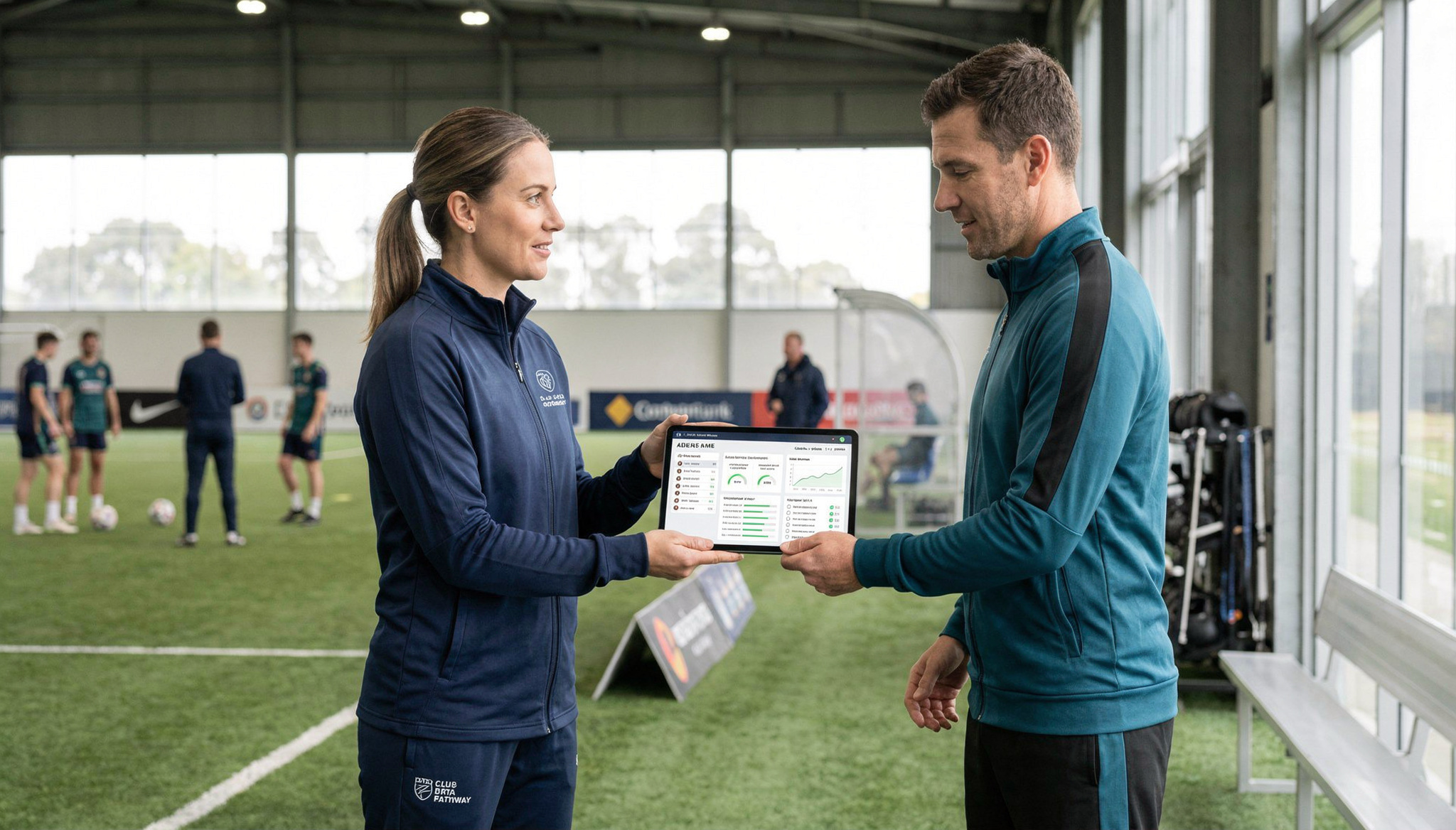
Checklick is built around exactly this model. Coaches evaluate athletes using their phone or tablet during sessions, and those evaluations flow immediately into a centralized platform that belongs to the club rather than to any individual coach. When an evaluation is entered, it is there. When a coach leaves, their contribution to the club’s data history stays. When a new coach joins, they can see the full evaluation history for every athlete in their group from their first day.
This changes the nature of onboarding entirely. Instead of a new coach spending the first weeks of a season building a picture of their athletes from scratch, they come in with a complete record of where each athlete left off. They can see which skills each athlete has completed, which levels they have been assessed at, how they progressed across previous seasons, and where they are in the program pathway. The new coach’s job is to continue a development journey rather than to start a new one.
For clubs that are also dealing with rapid growth or running programs at multiple locations, this centralization is even more critical. When athlete data lives in a platform rather than in individual coaches’ files, it is available to administrators and coaches across the organization simultaneously. Real-time access to class lists and evaluation records means instructors can always see what they need without having to ask someone to send it to them.
What Good Coach Onboarding Looks Like With the Right System
When a centralized athlete tracking platform is in place, onboarding a new coach is a fundamentally different process than it is when data is fragmented across personal files and informal records.
The outgoing coach’s contribution to the club’s data history does not need to be manually transferred. It is already in the system. The incoming coach is given platform access and can immediately see all the information they need. They do not need to be briefed on every athlete individually because the evaluation records speak for themselves.
The new coach’s own evaluations start flowing into the same system from their first session. By the time they have completed their first season, their contribution to the club’s data history is already documented and accessible. The next coach who comes after them will have the same advantage they had: a complete, structured record rather than an empty slate.
This is what institutional knowledge actually looks like when it is built on a proper system rather than on personal memory. The club learns from every season because the data from every season is preserved and accessible. Coach transitions become a normal operational event rather than a recurring risk of data loss.
Practical Steps for Protecting Athlete Data During Coach Transitions
For clubs that are not yet using a centralized athlete tracking platform, there are some practical steps that can reduce data loss in the short term while a proper system is being put in place.
Before any coach leaves, create a structured off-boarding process that includes a formal data handover. Ask the departing coach to document where each athlete is in the program, which skills they have been working on, and any context that would help the incoming coach understand each athlete’s development trajectory. This is imperfect compared to a centralized system, but it is better than nothing.
Build program evaluation criteria into a shared format that all coaches use consistently. When coaches are all working from the same skill matrices, their records are comparable and can be aggregated without requiring anyone to reconcile different formats.
And make onboarding new coaches onto your tracking platform part of the standard induction process rather than an optional extra. The sooner a new coach is recording evaluations in the centralized system, the sooner the club’s data record for that season is complete.
Checklick supports all of this through its evaluation platform. Clubs build their skill matrices inside the platform, coaches evaluate athletes on mobile devices during sessions, and everything is stored centrally and accessibly from day one. The evaluations platform starts at fifteen dollars per month for clubs with under fifty evaluators. There is a thirty-day free trial so you can see how it fits your club’s workflow before committing.
Athlete data is one of the most valuable assets a sports club builds over time. Protecting it through coach transitions is not just a data management question. It is a question of whether the club is genuinely learning and improving from everything its coaches and athletes have contributed, or whether that contribution disappears every time someone moves on.
Start your free trial at checklick.com and make sure your athlete data stays where it belongs.